
Persecuted, then tolerated
In Martinique, Jews were subject to official persecution. In 1659, under pressure from the Jesuits, they were denied the right to trade. Their economic success stirred resentment among those who saw them as a threat to local commerce:
I believe it is necessary for the King to issue a regulation concerning the Jews. They own land and houses, have Christian slaves and numerous Christian employees. They control nearly all commerce and are multiplying rapidly, to the point that trade is almost entirely in their hands.
In 1685, Louis XIV ordered their expulsion from the island. At the time, their number did not exceed eighty. Some fled to Barbados, while others became “conversos”—Christians by coercion. Governor de Baas wrote on August 1, 1669:
The Jews established here perform their ceremonies on Saturdays, requiring their slaves and indentured servants to observe the Sabbath and work on Sundays. They appear publicly during the Church’s mourning period, which lasts from Holy Thursday to Easter Sunday—contrary to practices in all parts of Europe where they are tolerated.
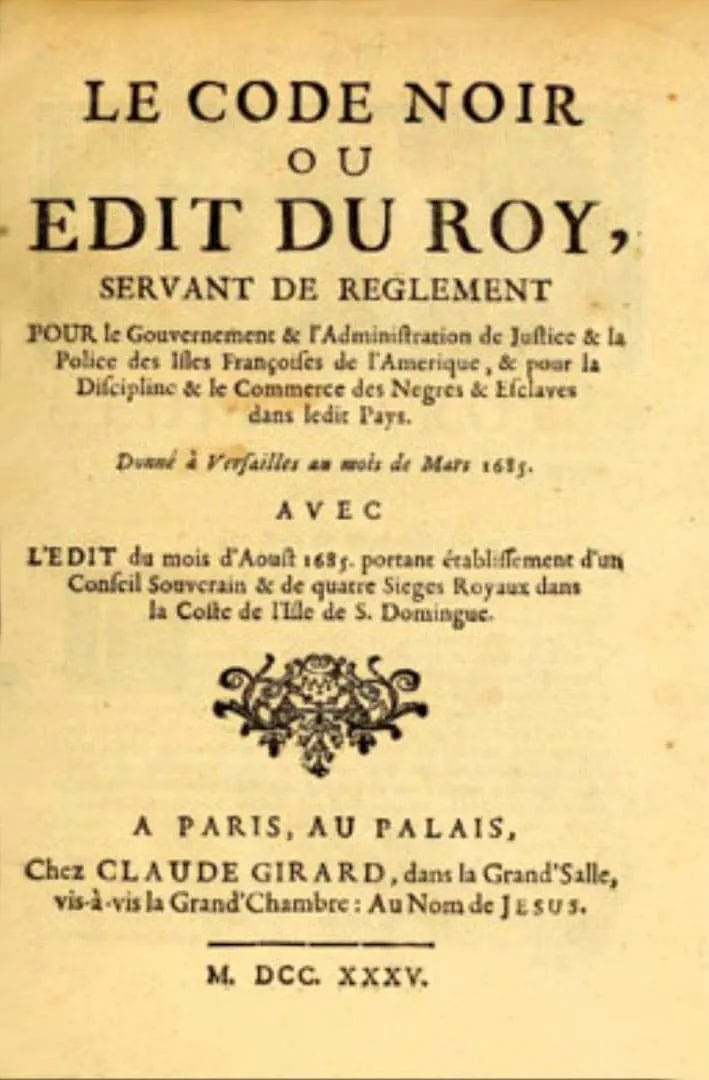
On September 1, 1688, the King repealed the expulsion of Jews from the islands, which had previously been mandated by the first article of the Code Noir. Later, some Jews involved in the slave trade were even ennobled, such as Joseph Nunès Pereyre and Abraham Gradis.
Despite the jealousy and many obstacles they faced due to their success, Jewish slave traders—whether merchants, shipowners, bankers, or planters—were far from marginalized. Historian Pluchon notes with some satisfaction that several were even ennobled by the king. This was the case for Joseph Nunès Pereyre, a banker, who was granted the titles of Viscount of La Ménaude and Baron of Ambès in 1720 by the Regent Philippe d’Orléans. Another slave trader, Abraham Gradis, received letters of nobility in 1751.
Their life in Martinique was not that of a secluded people. According to Jesuit accounts from the island, they were fully integrated:
They mix freely with Christians, eat and drink with them, and under the pretext of trade and commerce, take advantage of simple people and corrupt the innocence of Christian women and girls… Children play together without distinction.
Among the first Jews of Martinique was Jacob Gabaye, who lived in Saint-Pierre, the island’s first established town. On his property stood a rudimentary synagogue and a Jewish cemetery. Other early figures included Jacob Louis of Rivière-Salée, Abraham Bueno of Marigot, Isaac Le Tob of Le Carbet, and especially Benjamin Da Costa, a pioneer in the cultivation of cacao, sugarcane, and the extraction of indigo. Da Costa’s chocolate and fruit preserves—made using recipes he had learned from the Indigenous Carib people, later exterminated—were sold in Amsterdam, Bordeaux, and Bayonne. By introducing sugar refining to Martinique, Da Costa would go on to transform the island’s economy.
Life on the island after royal authorization
Upon arriving in Martinique, Dutch Jews primarily settled in the island’s northeast, notably in Basse-Pointe and Marigot. Although located in the west, they also contributed to the construction of Saint-Pierre during the early years of French colonization. Over time, they became landowners, provoking envy—particularly among the Jesuits, who represented the majority of Catholics in Martinique.
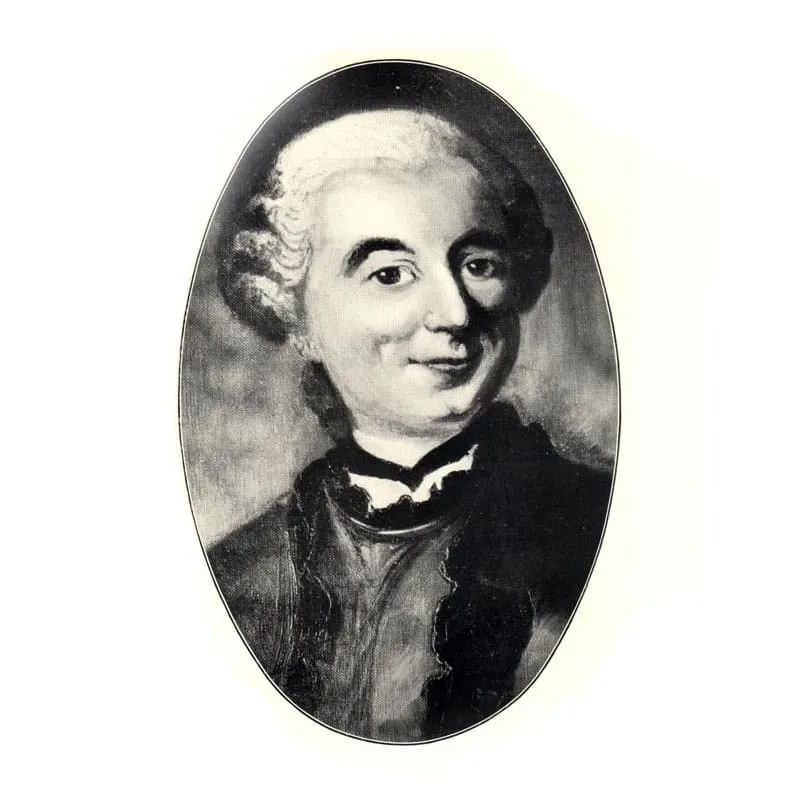
The Jesuits petitioned the King of France to expel them from the island. Jews only returned starting in 1727. Among them was Abraham Gradis, from the prominent Gradis family of Bordeaux. With his brother David, he established a company to supply the French Navy, mainly with rum. Upon his death at just 32 years old, he left a notarized will bequeathing his estate to his two unmarried sisters, Judith and Rebecca. However, French authorities annulled the will, and the royal treasury seized the inheritance, arguing that a Jew had no legal status on the island.
Nevertheless, the Gradis family prospered thanks to the thriving sugar industry. Their plantation in Basse-Pointe faced that of the powerful Depaz family—also Jewish—based in Saint-Pierre. Despite being competitors, relations between the two families were far from hostile. Lopez Depaz began his career as a broker for the Gradis family. He later sought to formalize his status with the King, referring to “the community of merchants of the Hebrew nation residing throughout this island.” He requested the right for Jews to live in Martinique, build sugar factories, and manufacture their products. Royal authorization was granted.
Gradually, Jewish families integrated into the Martinican society. Some, like the Depaz family, fully assimilated and joined the ranks of the “békés,” the island’s white Catholic aristocracy. Others, such as the Bueno (who became Lebon) and the Levy families, passed their names on to some of the island’s Black and mixed-race populations.
After the eruption of Mount Pelée in 1902, which destroyed Saint-Pierre, few traces of the former Jewish presence survived—except for the Meyer family’s distilleries. As a result, it becomes difficult to trace Jewish life in Martinique between the eruption and the Second World War, during the Occupation of France beginning in 1940.